Summer in Pennsylvania brings more than just high temperatures. It also brings humidity, which can make your home feel much warmer and less comfortable than the thermostat suggests. Many homeowners are surprised to learn how much work their cooling system does to manage moisture levels. If you have been considering a dehumidifier in Red Lion, PA, understanding the relationship between humidity and air conditioning can help you make a more informed decision.
Your Air Conditioner Removes Humidity, Too
Most people think of air conditioners as machines that simply cool the air. While cooling is their primary job, they also remove some moisture from your home’s air during normal operation.
As warm indoor air passes over the evaporator coil, moisture condenses on the cold surface and drips into a condensate pan. The collected water then flows through a drain line and safely exits the system. This process helps reduce indoor humidity while lowering temperatures.
However, air conditioners are designed primarily for cooling, not dedicated humidity control. During humid Pennsylvania summers, the amount of moisture in the air exceeds what the system can comfortably manage on its own.
Why Humidity Makes Your AC Work Harder
High humidity affects more than just comfort. It also impacts how efficiently your body cools itself. When humidity is high, sweat evaporates more slowly from your skin. Since evaporation is one of the body’s natural cooling mechanisms, humid air can make you feel hotter even when the indoor temperature remains the same.
As a result, many homeowners lower their thermostat settings to feel comfortable. This forces the air conditioner to run longer cycles and operate more frequently throughout the day. The increased runtime leads to higher energy consumption and places additional wear and tear on critical system components. That extra workload means more frequent repairs and potentially shortened equipment lifespan.
Watch for Condensate Drain Problems
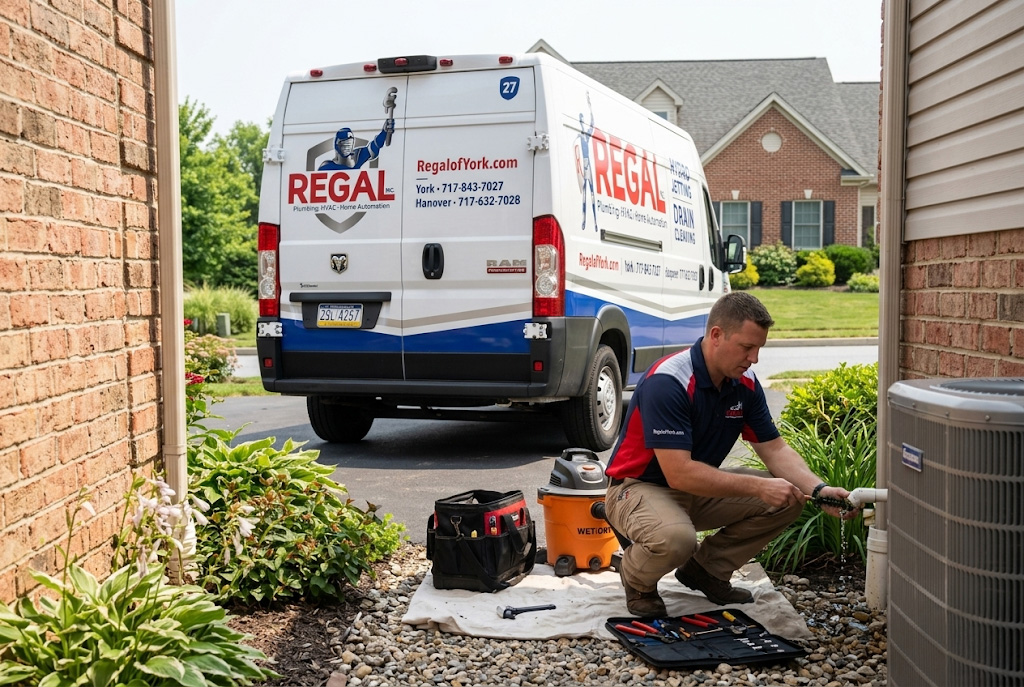
The more moisture your air conditioner removes, the more water must travel through the condensate drainage system. This can create problems if the drain line becomes partially blocked. Algae, mold, and debris can accumulate inside the drain line over time. When water cannot drain properly, the condensate pan may begin to fill faster than it can empty.
This can lead to overflowing pans, water damage, mold growth, and system shutdowns if safety switches are triggered. Regular maintenance helps ensure the drain system remains clear and capable of handling the heavy moisture loads that summer weather often creates.
Consider a Whole-Home Dehumidifier
One of the best ways to improve comfort and reduce stress on your air conditioner is to install a whole-house dehumidifier.
A dedicated dehumidifier removes excess moisture before your air conditioner has to deal with it. This allows the cooling system to run less often, reducing energy use and minimizing wear on major components. Homeowners often notice improved comfort even at slightly higher thermostat settings.
Lower humidity levels also improve indoor air quality. Mold, mildew, and bacteria require moisture to thrive. By controlling humidity throughout the home, a whole-house dehumidifier helps create a healthier indoor environment.
Our expert team can evaluate your home’s humidity levels, inspect your cooling system, and recommend the right whole-house dehumidification solution to keep your home more comfortable all summer long.
Contact Regal Plumbing, Heating and A/C today and experience the difference. Committed to Service, Committed to You, Since 1974.